
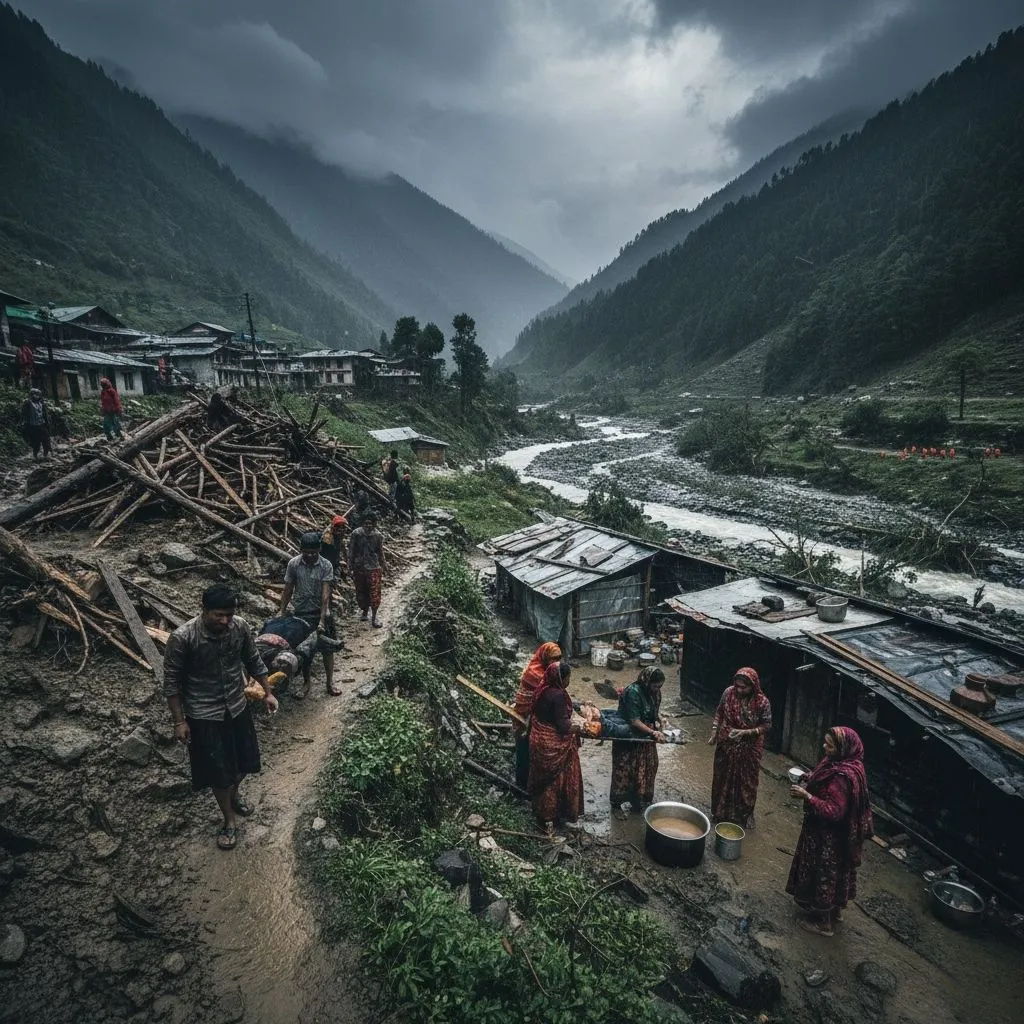
Never before has the role of community been considered as important in governing the disasters related to rivers as it is now. In all policy formulations by and for the hill states of India, local communities are given a predominant role in governing disasters. Being located in distant and inaccessible areas, local communities, above all else, play the role of being the critical first responder to natural disasters such as floods, landslides, seismic volatilities, land subsidence and so forth. In recent years, it is the local community, that, according to newspaper reports, come forward and save the lives of hundreds of pilgrims and tourists locked up in debris or washed away when the Ganga and her tributaries change their course with sudden gush of water breaking through the high walls of mountains. Even NDRF or SDRF teams would take days to reach the affected area. Secondly, since they are more familiar with the area, they know the alternative paths and trails of evacuation and transportation of the wounded and injured and can serve as pointsman for the rescue teams. They know better where they need to take shelter when disaster strikes. It is important to note here that many distant and remote areas still remain uncharted in the hills and are outside the world of connectivity. Thirdly, while disasters take us by surprise because of their suddenness and element of surprise associated with them, village communities are known to take preparations between disasters. The off-disaster preparations turn out to be critical in times of disaster and help save lives. These preparations range from identification of safe areas and building shelters to provision of emergency health facilities and stocking up food and drinkable water for critical times etc.
Disasters, in short, call for a certain inversion of roles. Communities are not merely the mute recipients of relief and rehabilitation from the governments and perhaps from a plethora of other non-governmental organizations, but an instrument of providing relief and rehabilitation themselves in times of disasters. While most of the disaster policies are marked by a certain withdrawal of government especially in mountain areas, communities have become the principal agents of disaster governance. The role inversion from victimhood to agency is what marks the functioning of today’s communities whether in Uttarakhand or elsewhere.
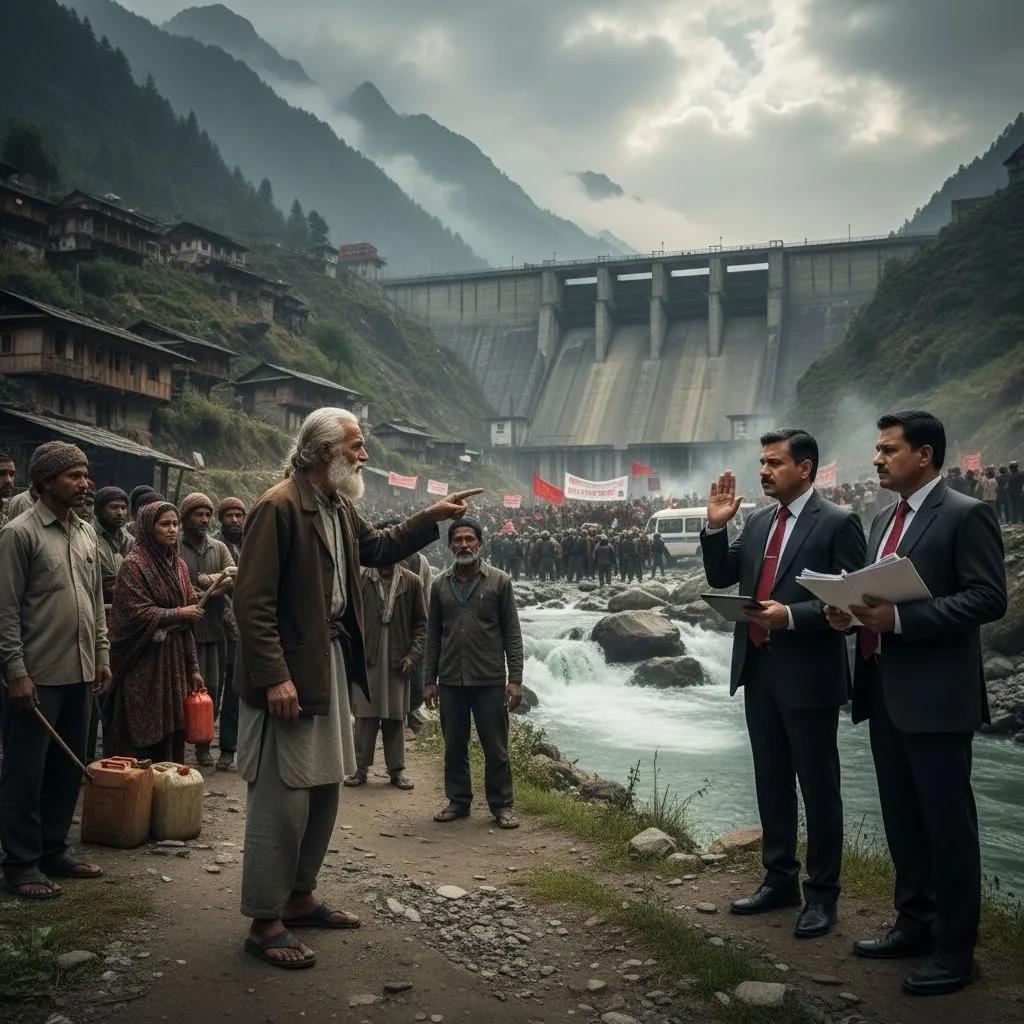
Such inversion of roles for the community does not always come as an unmixed blessing for all of us. For one thing, the agency that the community enjoys is supposed to be exercised from within the template of government policies and decisions. In many cases, as our research points out, communities are only allowed to play a subordinate role and the repository of knowledge that they are in possession of is depreciated and devalued. In my last post, I referred to the encounter between the villagers affected by the frequent change of course by the river Ganga and the high officials of administration in the northern district of Malda in West Bengal. I was a direct witness to an encounter which I would never forget in my life. The affected villagers came to submit a deputation to the district officials. They wanted government interference with the natural flow of the Ganga through such forms as laying of boulders and spars, construction of bridges, barrages and embankments to completely stop. They would rather prefer floodwater to flow to leave a thin crust of alluvial cover on the soil that would add fertility to the soil than to restrict the river water to the already silted riverbed by constructing embankments. An octogenarian man – the leader of the delegation – came forward in order to explain why they had wanted to stop government interference. He started to explain how the river that leaps into the Bengal floodplains from the Rajmahal hills carries a lot of silt that cannot pass through the obstacle of Farakka barrage creating huge deposit of undredged silt over years and decades. This also substantially reduces the river’s water-carrying capacity. On the other hand, embankments are constructed to keep the river water within the riverbed forcing the river to erode the banks displacing citizens in prolonged trickles, causing loss of assets etc. The huge water that the river carries from the upstream especially during monsoon finds no way to flow, ‘wheels within’ gradually cutting into the soft earth on the banks and letting the topsoil to cave in. The engineer did not have the patience to hear for so long. He cut the octogenarian off in the middle asking for what his IQ was. He flaunted his own degree in engineering before him and the delegation and turned them away. The local knowledge has always to suffer this ignominy.
For another, it is difficult to believe that depreciation and devaluation of local knowledge have no connection altogether with the nexus of politicians, contractors, security agencies and engineers. Much in line with what C Wright Mills once argued albeit in the American context, each of them forms part of a ‘power elite’ that functions in prefect coordination with the other. As the villagers’ protest at one point of time turned violent in the northcentral district of Murshidabad a few years ago, the policemen opened fire killing in the process one protester. These interventions, as most of the empirical studies suggest, have introduced newer sources of schism to a society that remained by and large homogeneous and united. In the sub-Himalayan state of Sikkim, for instance, construction of a series of dams on the river Teesta – considered as the state’s lifeline – since the 1990s has introduced newer differences to the society not only along ethnic lines (like the one between the ethnic Lepchas and the non-Lepchas), but also along class lines (like the one between the beneficiaries and the protesters). Construction of dams has set the beneficiaries off against the protesters and has been responsible for violence between them.
In other words, the good old days of idyllic, homogeneous communities whether in Uttarakhand or in other Himalayan states, are now over. The once organic communities are increasingly on the verge of disintegration, if not complete extinction – facing the threat of being replaced by more aggressively instrumental communities – instrumental only to the grand project of governance and developmen.
Post Tags:
Share: